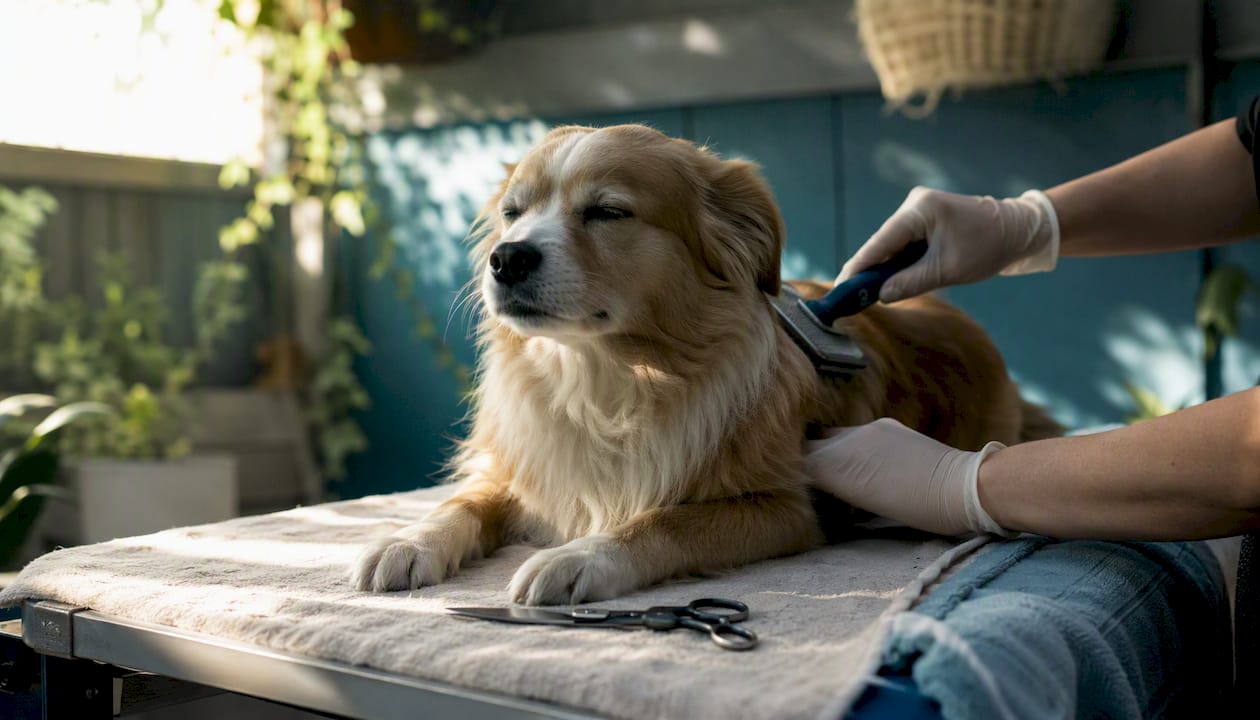
Yes, most reactive dogs can be groomed safely — the key is pacing, preparation, and the right environment. Reactivity during grooming almost always traces back to fear, prior negative experiences, pain, or sensory overload, not stubbornness or bad temperament. That distinction matters because it changes everything about how you approach the session.
If your dog has snapped, growled, or shut down during past grooms, take three steps before trying again:
- Stop any unsafe attempt immediately. A forced groom that ends badly makes the next one harder.
- Call your vet or a certified behaviorist if you suspect pain, a bite history, or extreme panic. Medical causes must be ruled out first.
- Book a low-pressure acclimation visit rather than a full groom. A short, no-scissors meet-and-greet lets your dog explore the space and meet the groomer without any pressure.
At The Pampered Pup, we offer cage-free, pet-paced appointments in Mobile, Alabama, designed for dogs who need a gentler start. Book online or call us at 251-776-2104 to schedule an acclimation visit.
Pro Tip: Tell the groomer about your dog’s history before the appointment, not when you arrive. A quick phone call lets us prepare the right space, tools, and pace from the moment your dog walks in.
Key Takeaways
Reactive dogs can be groomed safely when the process is gradual, pain-informed, and led by the dog’s comfort rather than a grooming timeline.
| Point | Details |
|---|---|
| Start with a vet check | Rule out pain before any grooming attempt, since pain is a leading driver of reactivity. |
| Use acclimation visits | Short, no-grooming meet-and-greets reduce stress at later full-service appointments. |
| Practice daily at home | Even one minute of calm handling paired with treats builds tolerance over weeks. |
| Know the red flags | Stop any session if your dog shows stress signals; never force a muzzle during panic. |
| The Pampered Pup | Cage-free, pet-paced grooming in Mobile, AL with staged services and a $19 gentle-intro package. |
Table of Contents
- How do professional groomers safely work with reactive dogs?
- Which grooming service model works best for your dog?
- How to prepare your dog before a grooming appointment
- What should you ask a groomer before booking?
- Safe at-home grooming tasks you can do right now
- How The Pampered Pup cares for reactive and anxious dogs
- A note from our team
- Gentle, cage-free grooming for dogs who need a calmer approach
- Sources
- FAQ
How do professional groomers safely work with reactive dogs?
Skilled groomers approach reactive dogs the way a good physical therapist approaches a nervous patient: slowly, with clear communication and zero force. The goal is never cosmetic perfection on the first visit. It is building enough trust to make the next visit a little easier.
Common low-stress practices include:
- Meet-and-greet visits before any grooming begins, letting the dog sniff tools and explore the space
- Gradual desensitization and counter-conditioning, pairing the sight or sound of clippers with calm praise and treats
- One-on-one handling in a quiet space, away from other dogs and loud equipment
- Splitting services across multiple visits — a nail trim one day, a bath another, a tidy-up trim a week later
Professional groomers read stress signals continuously and will stop a session that becomes unsafe. Growling is respected as a warning, not punished. A dog that growls is communicating; a groomer who listens to that signal keeps everyone safe.
Safety tools used in professional settings include properly introduced muzzles, non-slip table surfaces, secure grooming loops, and two-person handling for dogs with a documented bite history. Behavior notes are kept on file so every future visit starts with context.
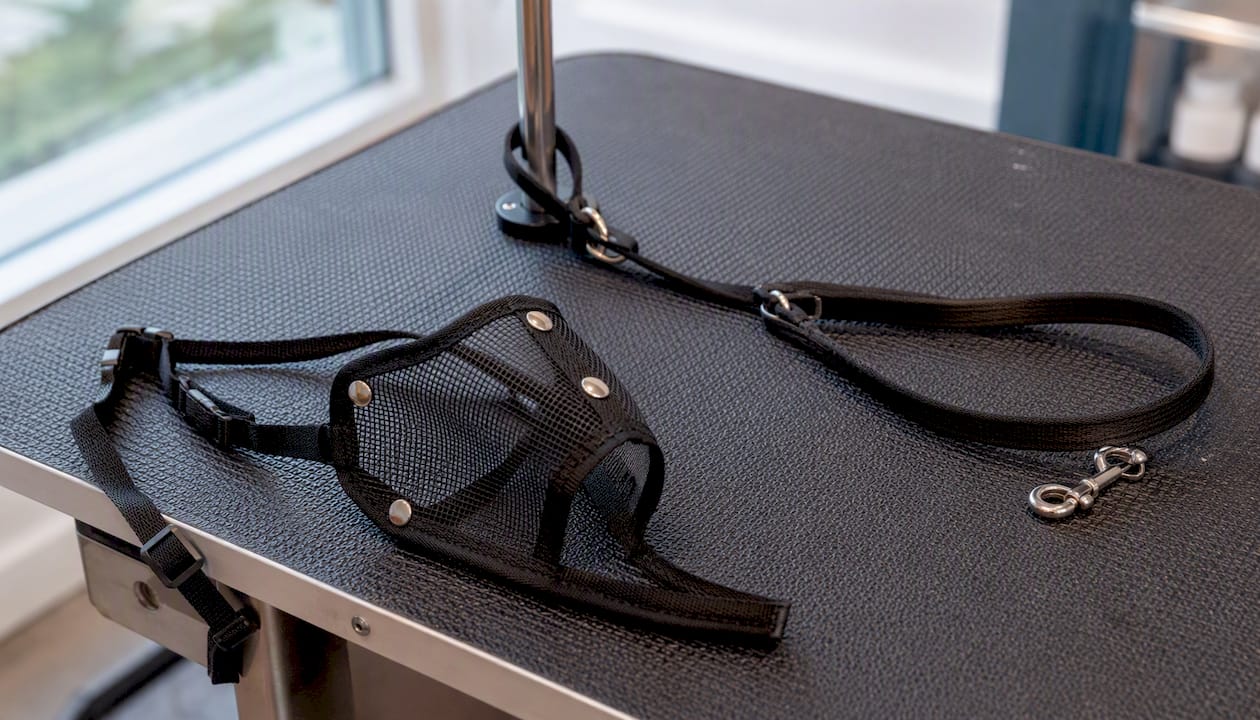
There are clear limits, too. Reputable groomers will not force a dog into submission, will decline a groom that poses genuine injury risk, and will refer owners to a veterinarian or behaviorist when pain, extreme panic, or the need for sedation is suspected. Sedation is a veterinary decision, never a grooming one.
Pro Tip: When booking, mention any bite history in writing. Most groomers appreciate a short note with your dog’s specific triggers — clippers near the ears, handling of back paws, the sound of a dryer — so they can adjust before the session starts.
Which grooming service model works best for your dog?
The right service model depends on your dog’s specific triggers, not just the severity of reactivity. Here is a brief look at each option.
Mobile grooming brings the groomer to your driveway. It removes many salon stressors — other dogs, unfamiliar smells, loud equipment in a shared space — and suits dogs whose reactivity is primarily environment-driven. The trade-off is limited space and fewer staffing options if two-person handling is needed.
Boutique cage-free in-salon care works well for dogs that are social but anxious. Smaller salons offer the scheduling flexibility and private one-on-one time that high-volume chains rarely can. Staged acclimation visits are easier to arrange, and groomers build a relationship with your dog over time.
Vet-assisted or clinic-based grooming is appropriate for extreme cases where sedation or close medical monitoring is needed. This is not a first-line option; it is reserved for dogs where standard handling poses a genuine safety risk.
Home grooming covers simple maintenance between professional visits: brushing, paw handling, and light touch-and-reward sessions. It is not a replacement for professional care but keeps coats healthier between appointments.
| Feature | Mobile grooming | Boutique cage-free salon | Vet-assisted | Home grooming |
|---|---|---|---|---|
| Noise level | Low | Low to moderate | Low | Minimal |
| One-on-one attention | High | High | High | Complete |
| Suited for severe reactivity | Moderate | Moderate | Yes | Maintenance only |
| Appointment flexibility | Limited | Good | Limited | Full |
Key triage questions to ask yourself:
- Does your dog react to other animals, or to the grooming tools themselves?
- Is there any bite history or known pain?
- Does your dog shut down with strangers, or warm up quickly?
- Are there mobility or joint issues that make table handling uncomfortable?
Your answers point directly to which model fits best.
How to prepare your dog before a grooming appointment
A little daily practice at home makes a professional appointment far less stressful for your dog. Think of it as building a small savings account of calm experiences before the big withdrawal of a full groom.
- Schedule a vet check first. Rule out pain in the hips, ears, teeth, or paws before any grooming attempt. Pain is one of the most common and overlooked drivers of grooming reactivity.
- Start short daily handling sessions. Even one minute of calm paw touching, ear handling, or gentle coat brushing, paired with a treat, builds tolerance over days and weeks.
- Introduce tools without using them. Let your dog sniff the brush, hear the clippers from across the room, and see the nail grinder sitting on the floor before it ever touches them.
- Practice standing on a stable surface. A non-slip bath mat on the floor mimics the grooming table. Reward calm standing for a few seconds at a time.
- Desensitize to sounds. Play recordings of blow dryers or clippers at low volume during a relaxed moment, gradually increasing volume over several days.
Realistic expectations matter here. Short, repeated daily sessions produce measurable improvement in grooming tolerance over weeks, not days. Plan for multiple short professional visits before a full groom is possible.
On appointment day, bring high-value treats your dog does not get at home, a familiar-smelling blanket or shirt, and a written note for the groomer listing specific triggers and what has worked during your practice sessions.
Safety note: If your dog shows signs of pain during handling — flinching, yelping, sudden aggression at a specific body part — stop and consult your vet before continuing. Never rush muzzle introduction during a moment of panic; it must be paired with calm, positive associations over multiple sessions.
What should you ask a groomer before booking?
Vetting a groomer for a reactive dog takes about five minutes on the phone and can prevent a genuinely traumatic experience. Here are the questions worth asking.
Interview questions:
- How much experience do you have with reactive or fearful dogs?
- Do you offer acclimation or meet-and-greet visits before a full groom?
- What handling methods do you use when a dog becomes stressed?
- How do you introduce a muzzle, and under what circumstances would you use one?
- What is your protocol if a dog escalates during a session?
- Do you coordinate with vets or behaviorists when needed?
Boutique salons that offer private handling time and flexible scheduling are generally better equipped for reactive dogs than high-volume chains. Ask specifically about appointment length and whether the groomer works alone or with an assistant.
Red flags to watch for:
- “I can finish any dog” or promises to complete the groom regardless of the dog’s stress level
- Refusal to schedule an acclimation visit or a meet-and-greet
- No written safety protocols or documented behavior notes
- A busy, noisy environment with no private handling option
- Dismissiveness about bite history or prior grooming trauma
On pricing: reactive dog grooms often take longer, require multiple shorter visits, and may involve a small-breed tidy-up fee rather than a full groom on the first visit. That is normal and appropriate. Paying for a 30-minute acclimation session is far less costly than a traumatic full groom that sets your dog back months.
Ask about staff training credentials. Groomers who have completed a formal apprenticeship program or hold Fear Free Grooming certification have specific training in low-stress handling that generalist groomers may not.
Safe at-home grooming tasks you can do right now
Home sessions are not about achieving a polished look. They are about keeping your dog comfortable between professional visits and slowly expanding what your dog tolerates.
- Touch-and-reward paw handling. Hold one paw gently for two seconds, release, and offer a treat. Repeat daily, gradually increasing the duration.
- Short brushing sessions. Use a soft-bristle brush or a rubber curry brush, which most dogs find less threatening than a slicker brush. Brush for 30 seconds, reward, stop. Build from there.
- Towel-dry baths. A warm, calm bath at home using a gentle shampoo, followed by towel drying rather than a blow dryer, removes Gulf Coast salt, sand, and humidity buildup without the sensory intensity of a dryer.
- Nail grinding introduction. A quiet nail grinder tends to be less startling than clippers for many dogs. Introduce it turned off first, then on from a distance, then briefly touching one nail. Pair every step with a treat.
Tool choices reduce stress significantly. A rubber curry brush or a soft pin brush creates less pulling sensation than a metal slicker. A quiet, low-vibration nail grinder is gentler than the sudden snap of clippers. For dogs with thick Gulf Coast coats prone to year-round shedding, a de-shedding brush used in short passes keeps the coat manageable without overwhelming the dog.
Signs to stop immediately: panting, yawning, lip licking, whale eye, freezing, or any growl. These are stress signals, not defiance. End the session on a calm note, offer a treat, and try again tomorrow with a shorter duration.
Pro Tip: Keep home sessions to five minutes or less. Ending before your dog reaches their stress threshold is what builds trust. A session that ends well is more valuable than a longer one that ends in shutdown.
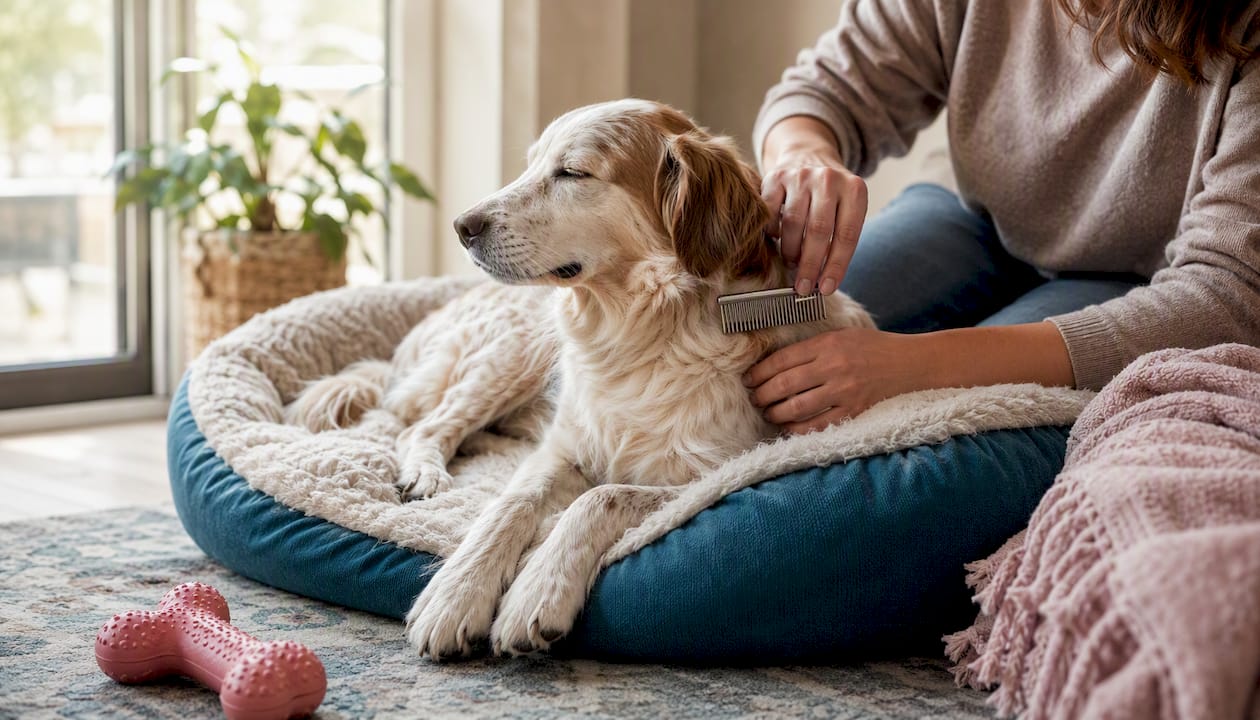
For additional at-home coat care between visits, our matting prevention guide covers simple daily habits that make professional grooms faster and less stressful.
How The Pampered Pup cares for reactive and anxious dogs
We built our entire process around one idea: your dog sets the pace, not the clock.
At The Pampered Pup, every appointment is cage-free and one-on-one. There are no kennels, no crates between services, and no rushing a dog through a session to make room for the next appointment. Dogs move through an open, supervised space where they can settle before we begin.
For reactive or anxious dogs, we offer:
- Acclimation visits — a short, no-pressure session where your dog meets our team, explores the space, and receives gentle handling with no grooming tools
- Staged services — a bath-only visit one week, a tidy-up trim the next, building toward a full groom at whatever pace your dog needs
- The $19 Pampered Pup Package as a gentle introduction: blueberry facial, tooth brushing, deep coat conditioner, nail grinding, and paw balm — low-intensity, soothing, and a natural first step for a dog new to professional care
Our team trains through The Pampered Pup Grooming Academy, our own apprenticeship program, with specific focus on reading stress signals, muzzle introduction, and knowing when to pause. We maintain documented behavior notes for every dog and coordinate with vets and behaviorists when a dog’s history calls for it.
We serve Mobile, Daphne, Spanish Fort, and Fairhope. Our puppy and senior grooming services follow the same patient, pet-paced approach for dogs at either end of the age spectrum.
Pro Tip: When you book with us, use the notes field to share your dog’s triggers, what has worked at home, and any vet or behaviorist guidance you have received. That information shapes the entire visit.
A note from our team
Reactive dogs are not problem dogs. They are dogs who have learned, often through no fault of their own, that grooming is something to fear. Our job is to gently rewrite that story, one small, calm moment at a time.
Here on the Gulf Coast, we see coats that carry salt air, sand, and the weight of year-round humidity. Regular grooming is not a luxury for these dogs; it is a genuine part of their comfort and health. We have worked with dogs who needed four acclimation visits before they were ready for a bath, and we have watched those same dogs walk in calmly months later. Progress is real. It just rarely looks like a straight line.
Safety always comes before speed, and a session that ends quietly is always a success.
Gentle, cage-free grooming for dogs who need a calmer approach
Reactive and anxious dogs deserve a spa experience that meets them where they are. At The Pampered Pup, our cage-free, pet-paced dog grooming services are designed for exactly that. We offer acclimation visits, staged grooms, and the $19 Pampered Pup Package as a soothing first step, all in a quiet, open space with no kennels and no rushing.
We serve Mobile, Daphne, Spanish Fort, and Fairhope. Book your appointment online or call us at 251-776-2104 to talk through the right starting point for your dog.
Sources
For owners who want to go deeper, these resources back the safety-first guidance throughout this article:
- Grooming Anxious Dogs Without the Stress
- Handling aggressive dogs safely: a guide for dog groomers
- Grooming Difficult Dogs: Safe, Calm Techniques That Work
For dogs with extreme reactivity, a bite history, or suspected pain, please consult your veterinarian or a certified applied animal behaviorist before scheduling any grooming appointment.
FAQ
Do dog groomers take reactive dogs?
Many professional groomers do accept reactive dogs, though the best approach involves an acclimation visit first rather than jumping straight into a full groom. Boutique and cage-free salons like The Pampered Pup are often better equipped for reactive dogs than high-volume chains, since they offer private one-on-one time and flexible scheduling.
How do groomers groom reactive dogs?
Groomers use phased protocols that include tool introduction, touch training, sound desensitization, and short active grooming sessions, often split across multiple visits. They read stress signals continuously and will stop a session rather than push through escalating fear.
Can groomers handle aggressive dogs?
Groomers can work with many dogs that display defensive aggression, using properly introduced muzzles, two-person handling, and documented behavior notes. However, a reputable groomer will decline a groom that poses a genuine injury risk and will refer the owner to a veterinarian or behaviorist when needed.
What do you do if your dog won’t let you groom it?
Start with short, daily touch-and-reward sessions at home to build tolerance gradually, and schedule a vet check to rule out pain. If home practice is not making progress, book an acclimation visit with a groomer experienced in calm grooming for nervous dogs rather than attempting a forced full groom.
Recommended
- Beyond the Brush: Why Grooming Is Essential for Your Pet’s Well-Being | Mobile, AL
- Puppy & Senior Dog Grooming in Mobile, AL | The Pampered Pup
- Bath, Tidy-Up, or Full Groom? How to Know What Your Dog Needs | Mobile, AL
Article generated by BabyLoveGrowth
Want a hand with this? We're a cage-free, pet-paced grooming salon on Oak Circle Drive East in Mobile, AL, with early drop-off from 7:30 AM Tuesday through Friday (8:30 AM Saturday). Book online or call 251-776-2104 and we'll build a plan around your dog.