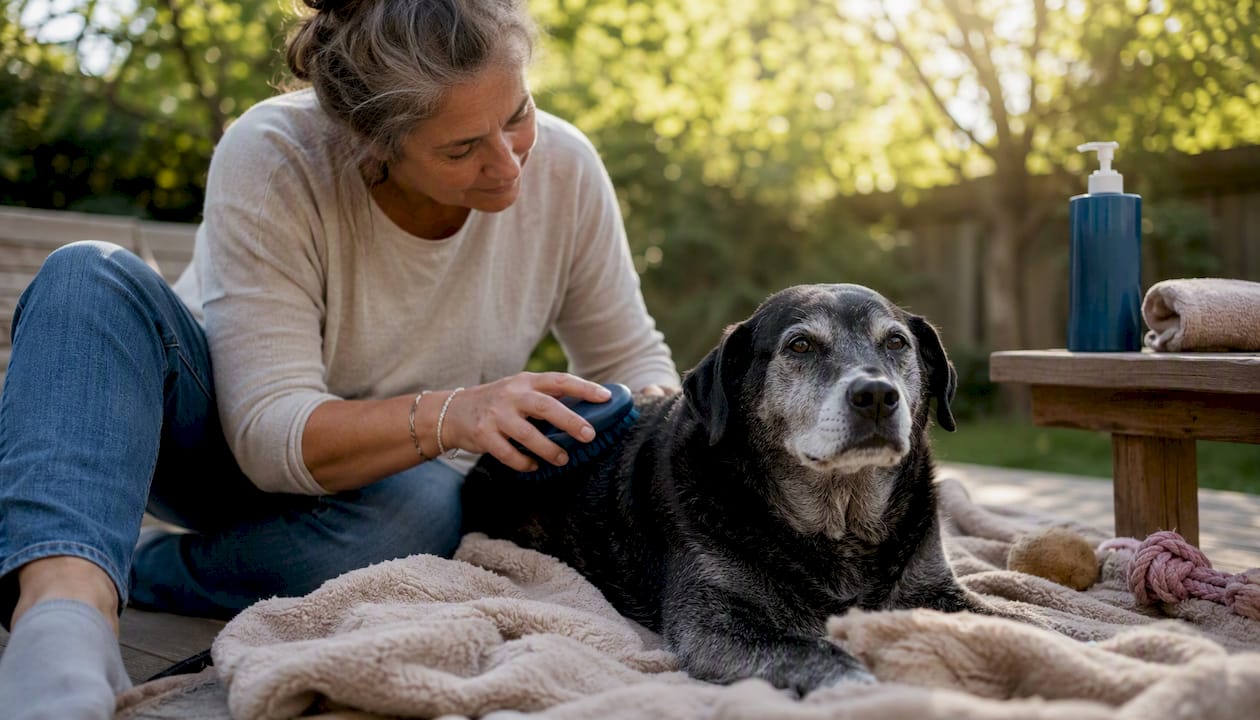
Grooming for senior dogs calls for one clear priority: keep every session short, gentle, and low-stress. Start with a non-slip surface, a soft brush, and a calm room, and you’ll already be ahead of most common mistakes. If your dog has mobility issues, joint pain, or a complex medication history, a cage-free, pet-paced professional groomer is often the safer first call. Here are six things to do before your next groom:
- Set up a non-slip surface. A rubber bath mat or yoga mat under your dog prevents slipping and reduces joint strain.
- Plan short sessions. Aim for 10–15 minutes per task rather than one long session. Multiple short sessions are generally better tolerated by older dogs than a single extended groom.
- Check current medications. Blood thinners, steroids, and pain medications all affect how your dog handles handling and stress.
- Choose a soft-bristle or rubber brush. Senior skin is thinner and bruises more easily than it did a few years ago.
- Inspect nails before you start. Overgrown nails change gait and cause real pain, so a quick visual check takes five seconds and tells you a lot.
- Have a treat plan ready. Calm praise and small, high-value rewards keep the experience positive and build trust over time.
Pro Tip: Take a short video of your dog walking before each grooming session. This baseline footage helps you and your vet spot gait changes between visits, a practice recommended by the 2023 AAHA Senior Care Guidelines.
Key Takeaways
Safe, gentle grooming for senior dogs comes down to short sessions, the right tools, and knowing when to call in a professional.
| Point | Details |
|---|---|
| Keep sessions short | Aim for 10–15 minutes per task; multiple short sessions are better tolerated than one long groom. |
| Choose senior-safe tools | Use soft-bristle or rubber brushes and hypoallergenic, pH-balanced shampoos to protect thin, dry skin. |
| Trim nails every 3–4 weeks | Overgrown nails shift weight and worsen joint pain; older nails are thinner and more brittle. |
| Know the red flags | New lumps, bleeding, limping, or sudden behavior changes mean stop grooming and contact your vet. |
| Pamperedpups-grooming for seniors | The Pampered Pup’s cage-free, pet-paced senior grooming in Mobile, AL is tailored to each dog’s mobility and health needs. |
Table of Contents
- Pre-groom safety checklist for senior dogs
- How to groom a senior dog step by step
- Tools and products that are safer for older dogs
- When to hire a professional groomer for your senior dog
- How The Pampered Pup supports senior dogs
- Grooming frequency for senior dogs and red flags to watch
- Evidence-backed tips on nails, skin, and mobility
- What we’ve learned from grooming senior dogs
- Senior grooming at The Pampered Pup in Mobile, AL
- Sources
Pre-groom safety checklist for senior dogs
Before you pick up a brush or nail clipper, spend 60 seconds running through this scan. It takes almost no time and can prevent a real injury.
Health and mobility check:
- Watch your dog walk across the room. Are they limping, stumbling, or reluctant to stand?
- Run your hands gently along their back, sides, and legs. Note any new lumps, tender spots, or swelling.
- Check breathing at rest. Labored breathing before grooming even starts is a signal to pause.
- Look at the skin and coat. Redness, flaking, or raw patches need attention before any tool touches them.
Medication and vet history:
- Write down all current medications, including supplements. Blood thinners increase bruising risk; steroids affect skin fragility. The 2023 AAHA Senior Care Guidelines recommend documenting baseline mobility and a full list of current therapeutics before any grooming or veterinary appointment.
- Note any recent surgeries, dental procedures, or anesthesia history.
- If your dog is on cardiac or endocrine medication, flag this for any professional groomer you work with.
Environment checklist:
- Non-slip mat in place (bath and grooming area).
- Warm water ready (not hot, not cold).
- Towels within reach so your dog isn’t left wet and shivering.
- Quiet room with minimal foot traffic.
- Session time blocked to 10–15 minutes per task for seniors; multiple short sessions are better tolerated than one long groom.
Grooming sessions are also one of the best opportunities to spot early health changes. Regular handling lets you notice new lumps, skin changes, and coat shifts that might otherwise go unnoticed between vet visits, making the health monitoring role of grooming just as valuable as the hygiene benefit.
How to groom a senior dog step by step
Work through this routine in order. You don’t have to complete every step in one session. In fact, splitting tasks across two or three short visits on the same day is often kinder on aging joints.
1. Set up and position your dog
Place your non-slip mat on a stable surface at a comfortable height. Let your dog choose their position. Allowing a senior dog to lie down or move during grooming reduces physical strain and lowers stress compared with forcing them to stand. Support their hindquarters gently if they need it.
2. Brushing
Start with the least sensitive areas, usually the back and sides, then move toward the legs, belly, and face. Use a soft-bristle brush or rubber curry brush for short coats, and a wide-tooth comb followed by a slicker brush for longer coats. Work in the direction of hair growth and keep strokes light.
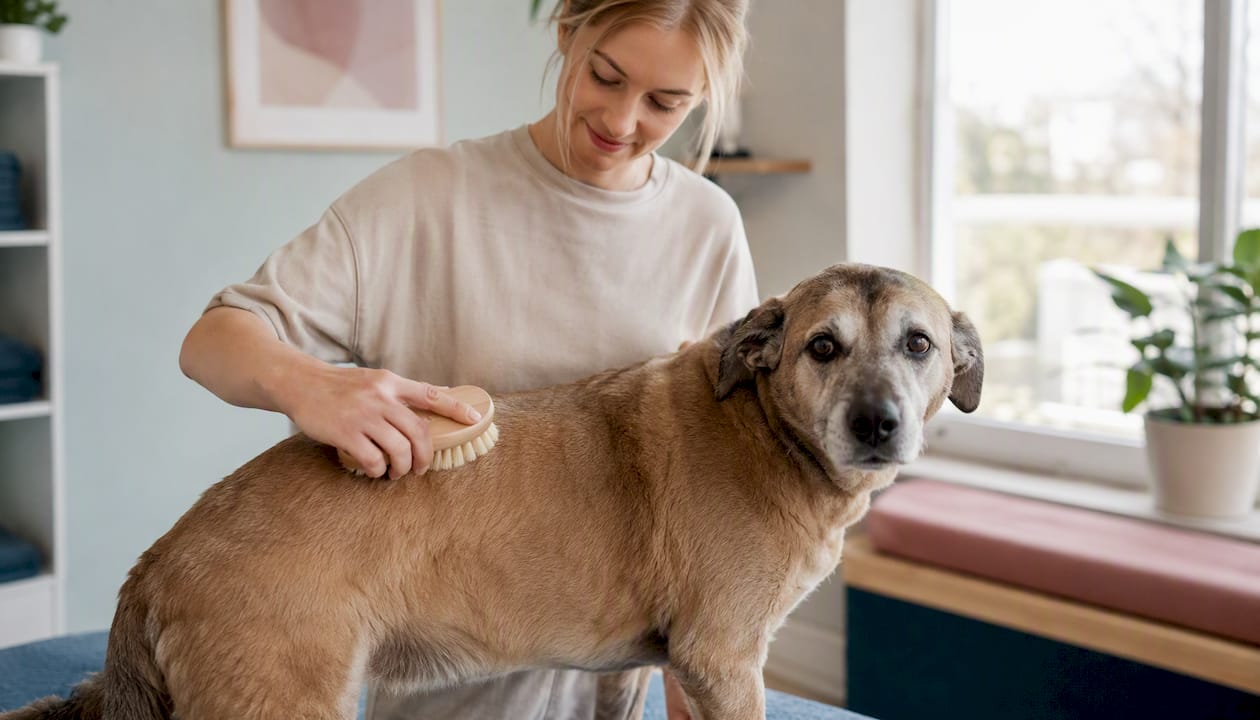
If you hit a mat, don’t pull. Apply a small amount of detangling conditioner, work the mat apart with your fingers from the outside in, and then use a wide-tooth comb. Short, frequent maintenance trims and early mat prevention are far kinder than occasional long sessions that may eventually require body-clipping or sedation. If a mat is tight against the skin, stop and see a professional groomer. Cutting matted fur yourself risks nicking the skin and missing underlying sores that are common in senior dogs.
Pro Tip: Brush for five minutes, then give a one-minute break with calm praise. This rhythm keeps older dogs relaxed and tells you quickly if a spot is tender.
3. Bathing
Bathe your senior dog every four to six weeks unless a skin condition requires a different schedule. More frequent baths strip the natural oils that aging skin needs. Use lukewarm water and a hypoallergenic, pH-balanced shampoo formulated for sensitive skin. Avoid sulfates and artificial fragrances.
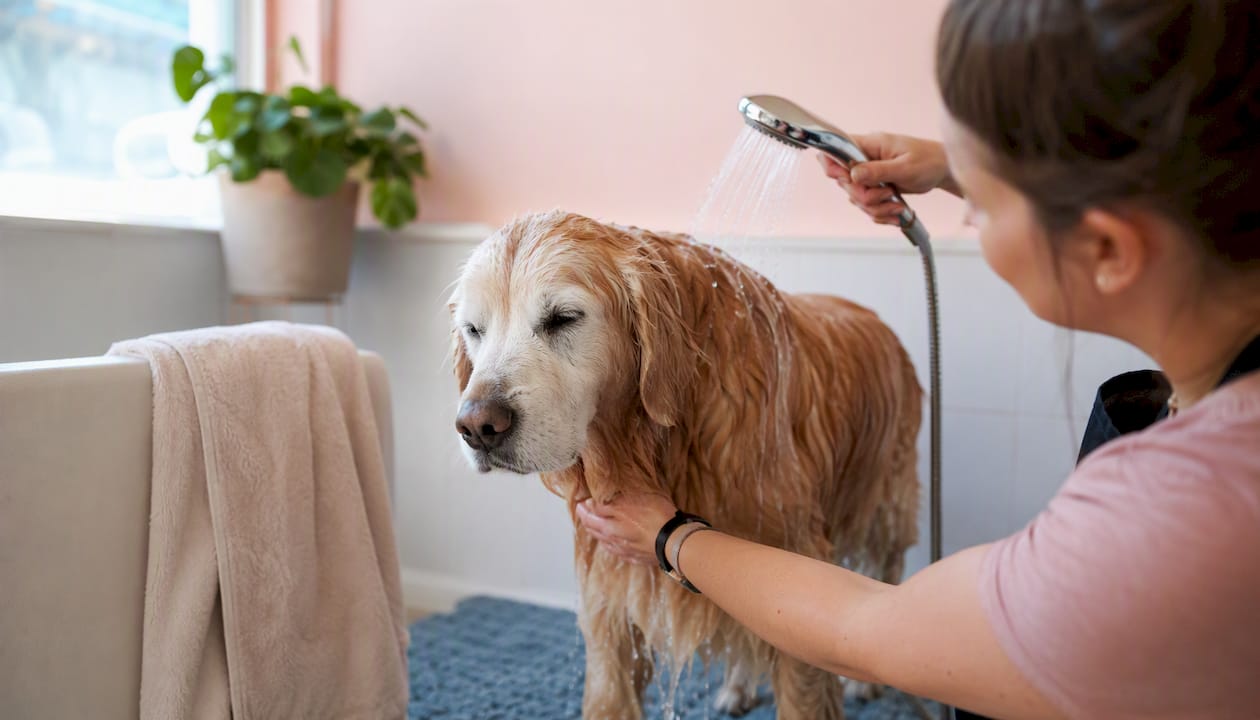
Support your dog throughout the bath. A handheld sprayer gives you control and keeps water out of ears and eyes. Rinse thoroughly, as residue irritates sensitive skin. Between baths, waterless grooming products and spot cleaning keep your dog fresh without the full process.
Drying matters more than most owners realize. Pat dry with a warm towel rather than rubbing, which can irritate thin skin. If you use a blow dryer, keep it on the lowest heat setting and hold it at least six inches from the coat. Never leave a senior dog wet in a cool room.
4. Sanitary trims and paw care
Trim the hair around the rectum, vulva, and prepuce with blunt-tipped scissors to prevent fecal and urine buildup. Hygiene trims and shorter, more frequent maintenance help prevent painful matting in these sensitive areas and reduce the need for lengthy sessions that strain arthritic joints.
Trim paw hair level with the pads to improve traction on smooth floors. Check between the toes for matting, redness, or foreign material. Pressure sores can develop on bony prominences, so look carefully at elbows and hips while you’re working in this area.
5. Ears, eyes, and teeth
Ears: Wipe the outer ear flap with a damp cotton ball. Don’t insert anything into the ear canal. A mild, vet-approved ear cleaner is fine for dogs prone to buildup. If you see redness, discharge, or smell an odor, that’s a vet visit, not a grooming task.
Eyes: Wipe gently around the eye area with a soft, damp cloth to remove discharge. Use a separate cloth for each eye. Persistent tearing or cloudiness warrants a vet check.
Teeth: Daily brushing with a dog-safe toothpaste is ideal. If your dog resists, a finger brush or dental wipe is a gentler starting point. Never use human toothpaste.
6. Nail trimming
Overgrown nails change the way a dog bears weight, which accelerates joint pain in dogs who already have arthritis. Regular, gentle nail trims are one of the most impactful things you can do for a senior dog’s comfort and mobility.
Trim nails regularly. Senior nails are often thinner and more brittle, so a nail grinder (rotary tool) tends to be gentler than a clipper for dogs with fragile nails. Clippers work well when nails are softer. Either way, trim small amounts at a time to avoid cutting the quick, the blood vessel inside the nail. On dark nails, look for a chalky white center as you trim, which signals you’re getting close.
If your dog pulls away, shakes, or vocalizes, stop and try again after a short break with treats. If nail trims consistently cause distress, a professional groomer or veterinary technician can handle this safely.
Tools and products that are safer for older dogs
Choosing the right gear makes a real difference when you’re working with thin skin, brittle nails, and sensitive joints. Here’s what to look for and what to skip.
Brushes and combs:
- Soft-bristle brush: Best for short-coated seniors and dogs with very thin or irritated skin.
- Rubber curry brush or grooming mitt: Gentle enough for daily use; doubles as a massage tool that many older dogs enjoy.
- Wide-tooth comb: Use on longer coats to work through tangles before a slicker brush.
- Avoid: Stiff wire slicker brushes used with heavy pressure. They can scratch or bruise fragile senior skin.
Shampoos and conditioners:
Look for hypoallergenic, pH-balanced, moisturizing formulas free of sulfates, parabens, and artificial fragrances. Oatmeal and aloe vera are common soothing ingredients. A leave-in conditioner spray can help with dry, brittle coats between baths.
Nail tools:
- Rotary grinder: Reduces the risk of splitting brittle nails and gives you more control over how much you remove.
- Guillotine or scissor-style clippers: Fine for softer nails; replace blades regularly so they cut cleanly rather than crushing.
Bathing and safety gear:
- Non-slip rubber mat for the tub or shower floor.
- Handheld sprayer for gentle, targeted rinsing.
- Ramp or step stool if your dog can’t safely step into the tub.
- Warm, absorbent towels and a low-heat dryer.
Pro Tip: For breed-specific coat needs, tool choices vary significantly. A Poodle mix needs different tools than a Labrador Retriever. When in doubt, ask your groomer which brush type suits your dog’s specific coat.
When to hire a professional groomer for your senior dog
Some situations call for a professional, and recognizing them early protects your dog from unnecessary stress or injury.
Clear triggers for professional help:
- Heavy matting that is tight against the skin or covers a large area.
- Severe arthritis or mobility issues that make standing for a bath unsafe.
- Open wounds, skin infections, or post-surgical sites.
- A history of oral surgery or tracheal problems that affect how your dog can be positioned.
- Any situation where sedation has been discussed with your vet. Sedation and anesthesia carry higher risks in older dogs, so a groomer experienced with low-stress handling may reduce or eliminate that need.
Mobile vs. cage-free salon:
Mobile groomers come to your home, which eliminates travel stress entirely. A cage-free salon like The Pampered Pup keeps your dog out of a kennel between tasks, which reduces anxiety for dogs who don’t do well in confined spaces. Both are strong options for seniors. Mobile grooming is particularly helpful for dogs who stress with car rides or who have conditions that make transport uncomfortable.
What to disclose at booking:
- All current medications and supplements.
- Any anesthesia or sedation history.
- Mobility limits (can they stand, do they need support?).
- Known pain points or tender areas.
- Cardiac, endocrine, or respiratory conditions.
- Behavioral cues that signal stress (lip licking, yawning, freezing).
Fear Free-certified groomers are trained to read these stress signals and adjust their approach in real time, which is especially valuable for seniors whose tolerance can change from visit to visit.
How The Pampered Pup supports senior dogs
The Pampered Pup’s senior grooming approach is built around one idea: every dog moves at their own pace. There’s no assembly line, no rushing through appointments, and no cages between tasks.
For senior dogs specifically, that structure matters. A pet-paced flow means shorter handling windows, more frequent breaks, and the freedom to adjust positioning based on what your dog is comfortable with that day. A dog who needs to lie down for their brush-out can do exactly that.
What to communicate when you book and drop off:
- Current medications and any recent vet visits.
- Mobility limits and preferred positions (standing, sitting, lying down).
- Any areas that are tender or that your dog guards.
- Prior sedation history or anesthesia reactions.
- Behavioral cues your dog uses when they’ve had enough.
Pro Tip: Briefing your groomer on medical needs at drop-off, not just at booking, helps staff make real-time adjustments. A quick two-minute conversation at the door can change how the entire session goes.
Grooming frequency for senior dogs and red flags to watch
Frequency depends on coat type and your dog’s activity level, but here’s a practical baseline:
- Short-coated seniors (Beagles, Labs, Boxers): Brush weekly; bathe every four to six weeks; check nails every three to four weeks.
- Long-coated or double-coated seniors (Golden Retrievers, Collies, Shih Tzus): Brush three to five times per week; bathe every three to four weeks; professional trim every six to eight weeks; nail checks every three weeks.
- Curly or continuously growing coats (Poodles, Doodles): Professional groom every four to six weeks to prevent matting; brush at home every two to three days.
Between baths, waterless grooming products and spot cleaning keep your dog clean and comfortable without stripping skin oils.
Red flags that mean stop grooming and seek help:
- A new lump or bump discovered during brushing or bathing.
- Bleeding that doesn’t stop within a minute or two.
- Persistent limping or sudden reluctance to bear weight.
- Skin that looks infected (red, warm, oozing, or foul-smelling).
- Sudden behavior changes during grooming (snapping, crying, freezing) that are out of character.
- Pressure sores on elbows, hips, or other bony areas.
Evidence-backed tips on nails, skin, and mobility
A few key facts worth knowing before you set up your next grooming session.
Nail care is more urgent than most owners realize. Overgrown nails force a dog’s toes into an unnatural position, which shifts weight distribution and worsens existing joint pain. Older nails are often thinner and more brittle, which makes them more prone to splitting if neglected. Trimming every three to four weeks prevents the quick from growing forward, which makes future trims easier and less stressful.
Senior skin is genuinely more fragile. Aging skin loses elasticity and produces fewer natural oils, making it thinner, drier, and more prone to bruising. This is why tool choice matters so much. A stiff slicker brush that was fine at age three can cause real discomfort at age ten. Hypoallergenic, moisturizing products protect the skin barrier rather than stripping it.
Letting your dog choose their position reduces the need for sedation. Handling a dog in the position they prefer, whether standing, sitting, or lying down, is often more effective for comfort than insisting on a specific stance. This small accommodation can make the difference between a calm groom and one that requires pharmaceutical intervention.
Pro Tip: Use a mat prevention routine between professional grooms. Five minutes of gentle brushing every two to three days is far easier on aging skin than a de-matting session that pulls at the coat.
What we’ve learned from grooming senior dogs
One of the most common mistakes we see is owners (and groomers) trying to power through a full groom in one sitting because it seems more efficient. For a younger dog, that’s often fine. For a senior dog with arthritis, anxiety, or a complex health history, a single long session can set back their trust in grooming for weeks.
The small change that produces the biggest difference? Splitting the groom. Brush today, bathe tomorrow, trim nails the day after. Dogs who used to dread grooming often become genuinely relaxed about it when the process is broken into pieces they can handle.
We also want to encourage you to share everything with your groomer, even the details that feel minor. The medication your dog started last month, the new lump you noticed on their shoulder, the fact that they’ve been a little stiff in the mornings. That information shapes how we handle your dog from the moment they walk in the door. You know your dog better than anyone. Help us take care of them the way they deserve.
Senior grooming at The Pampered Pup in Mobile, AL
Senior dogs deserve a grooming experience that works with their body, not against it. At Pamperedpups-grooming, our cage-free, pet-paced approach means your older dog gets the time, space, and gentle handling they need, without the stress of a cage or a rushed appointment.
When you book a senior grooming appointment, tell us about your dog’s medications, mobility limits, any prior sedation history, and the behavioral cues that tell you they’ve had enough. That conversation at booking, and again at drop-off, lets us tailor every step of the groom to your dog’s specific needs that day. We serve Mobile, Daphne, Spanish Fort, and the surrounding area. Ready to schedule? Visit our grooming services page to see what’s available and book a time that works for you.
Sources
These are the primary sources used throughout this article. Each one is worth bookmarking if you want to go deeper on any specific topic.
- 2023 AAHA Senior Care Guidelines for Dogs and Cats (PDF)
- Tips for grooming older pets with sensitive skin | Lap of Love
- The surprising importance of pawdicures for pets | Pet Hospice Vet
- Senior dog care resources | Cornell University College of Veterinary Medicine
- 12 Tips To Caring For Your Senior Dog’s Coat | Fear Free Happy Homes
- Grooming tips for senior dogs | earthbath®
- Grooming senior dogs | Animal Behavior College
- How to groom an old dog | Wag!
- Pet Grooming for Senior Dogs: Special Considerations and Tips | Vista Hills Animal Hospital
Recommended
- Bath, Tidy-Up, or Full Groom? How to Know What Your Dog Needs | Mobile, AL
- How Often Should You Bathe Your Dog? A Mobile Groomer’s Guide | AL
- Beyond the Brush: Why Grooming Is Essential for Your Pet’s Well-Being | Mobile, AL
Article generated by BabyLoveGrowth
Want a hand with this? We're a cage-free, pet-paced grooming salon on Oak Circle Drive East in Mobile, AL, with early drop-off from 7:30 AM Tuesday through Friday (8:30 AM Saturday). Book online or call 251-776-2104 and we'll build a plan around your dog.