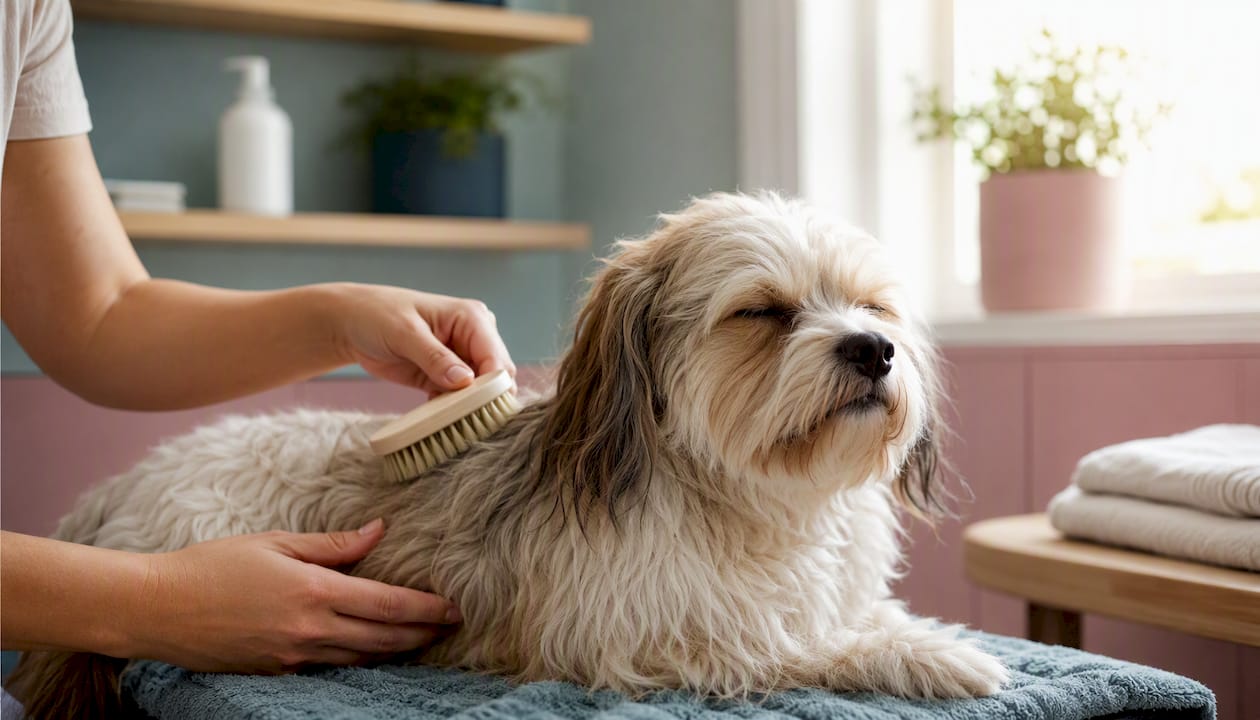
Regular grooming genuinely reduces allergens for sensitive dogs. Targeted brushing, hypoallergenic baths, and focused paw washing lower the Can f proteins found in dander that trigger reactions in both dogs and their people. Start today with three simple steps:
- Begin daily gentle brushing to remove trapped dander before it builds up
- Rinse or wipe paws after every outdoor walk to clear pollen and environmental allergens
- Switch to a fragrance-free, soap-free shampoo for the next bath — products like earthbath Hypoallergenic Shampoo, Davis Oatmeal & Aloe, Bio-Groom So-Gentle, or a vacuum-assisted grooming attachment (Dyson-style) are solid starting points.
None of these steps replace a veterinary diagnosis when symptoms persist, but they do make a real difference in day-to-day comfort.
Key Takeaways
Hypoallergenic dog grooming works best when daily brushing, fragrance-free baths every two to four weeks, and post-walk paw rinses are combined with veterinary diagnostics for any symptoms that persist.
| Point | Details |
|---|---|
| Grooming reduces allergens | Daily brushing and hypoallergenic baths lower dander and pollen load on the coat and skin. |
| Bath every 2–4 weeks | Most sensitive-skin dogs benefit from a gentle, soap-free shampoo bath on this schedule. |
| Read every label | Seek colloidal oatmeal, aloe, and ceramides; avoid fragrance, sulfates, and dyes. |
| See a vet for persistent signs | Recurring itch, ear infections, or lesions need diagnostics, not just more grooming. |
| Pamperedpups-grooming | Cage-free, pet-paced grooming in Mobile, AL with fragrance-free options for sensitive dogs. |
Table of Contents
- What are the best hypoallergenic grooming products for sensitive dogs?
- How do you groom a hypoallergenic dog step by step?
- What ingredients should you look for in hypoallergenic grooming products?
- What should you ask a professional groomer for a sensitive dog?
- When should you see a veterinarian instead of just grooming more?
- How often should you groom a hypoallergenic dog, and what does it cost?
- Why Pamperedpups-grooming’s cage-free approach works for sensitive dogs
- Gentle, allergy-aware grooming in Mobile, AL
- Sources
What are the best hypoallergenic grooming products for sensitive dogs?
A short, purchase-ready list across the categories that matter most:
| Product / Type | Best For | Key Ingredient or Feature | Usage Note |
|---|---|---|---|
| earthbath Hypoallergenic Shampoo | Sensitive skin, puppies 6+ weeks | Colloidal oatmeal + organic aloe, soap-free, fragrance-free | Every 2–4 weeks; patch test first |
| Davis Oatmeal & Aloe Shampoo | Dry, itchy, or irritated skin | 2% colloidal oatmeal, aloe vera, soap-free% colloidal oatmeal, aloe vera, soap-free](https://dailymed.nlm.nih.gov/dailymed/fda/fdaDrugXsl.cfm?setid=a1539fce-66d5-4766-b006-9745768158e1&type=display) | Safe with topical parasite controls |
| Bio-Groom So-Gentle Shampoo | Puppies, frequent bathing | Tear-free, very mild formula | Can be used more frequently than medicated options |
| Leave-on barrier spray or mousse | Post-bath barrier support | Ceramides or glycerin | Apply after drying; no rinse needed |
| Soft-bristle brush + steel comb | All coat types, daily use | Gentle on skin, distributes oils | Daily brushing; steel comb for final check |
| Dematting tool (wide-tooth) | Curly or long coats | Reduces pulling on sensitive skin | Use before bathing to prevent tight mats |
| Vacuum grooming attachment (Dyson-style) | Capturing dander at the source | Suction removes loose hair and dander | Use during or after brushing sessions |
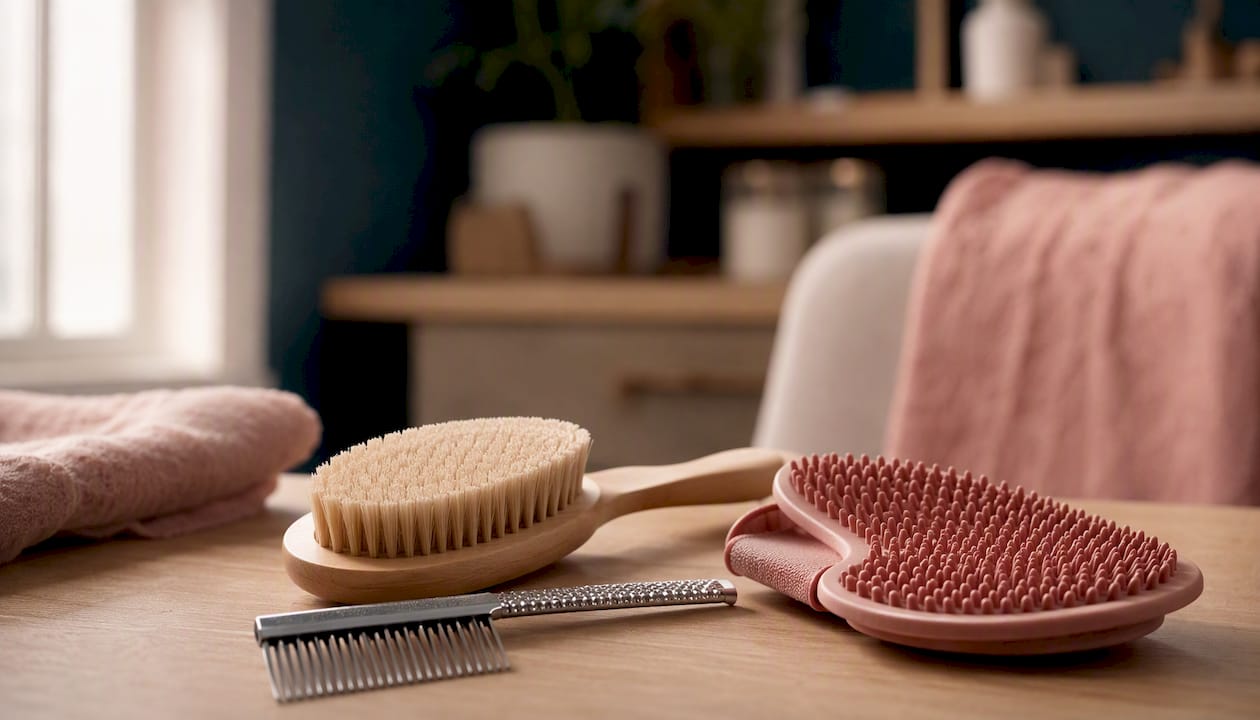
Soft-bristle brushes, rubber grooming tools, and fine-toothed combs are the professional standard for minimizing irritation in allergy-prone dogs. Pair them with a vacuum-assisted attachment and you capture dander before it drifts into the air.
Pro Tip: Always do a 24-hour patch test with any new shampoo or leave-on product. Apply a small amount to the inner foreleg, wait a day, and check for redness or itching before using it on the full coat.
How do you groom a hypoallergenic dog step by step?
A calm, ordered routine protects sensitive skin and keeps allergen levels low between professional appointments.
-
Prepare your space and tools. Gather your soft-bristle brush, steel comb, dematting tool, and chosen shampoo before your dog enters the tub. A calm, quiet room reduces stress from the start.
-
Brush using the line method. Part the coat in sections, lifting each layer to reach the skin. This technique physically removes trapped dander from low-shedding coats that hold debris close to the skin rather than releasing it naturally. Work from neck to tail, then legs.
-
Wet thoroughly with lukewarm water. Hot water dries out already-sensitive skin. Use a handheld sprayer to saturate the coat evenly before applying shampoo.
-
Apply shampoo and set a timer. Work the product down to the skin in gentle circular motions. For medicated shampoos, contact time matters — many labels specify around 10 minutes before rinsing. Set an actual timer rather than guessing.
-
Rinse in stages. Rinse once, then rinse again. Keep going until the water runs completely clear. Residue left on the skin is a common cause of post-bath itching.
-
Apply conditioner or leave-on barrier if needed. A ceramide or glycerin-based leave-on supports the skin barrier between baths. Distribute evenly and do not rinse.
-
Dry gently. Blot with a soft towel rather than rubbing. If you use a dryer, keep it on the lowest heat setting and hold it at a distance. High heat aggravates inflamed skin.
-
Check paws and ears. Wipe between the toes and inspect ears for redness or odor. A focused paw rinse after outdoor walks removes the bulk of pollen and environmental allergens between full baths.
Pro Tip: Low-noise clippers, slow deliberate movements, and calm verbal praise throughout the session reduce anxiety-related skin flare-ups. A dog that stays still gets a gentler, more thorough groom.
For a rinse-only session between full baths, skip steps 4 and 6 and focus on paws, belly, and any areas that contacted grass or pavement.
What ingredients should you look for in hypoallergenic grooming products?
Reading a label takes two minutes and can prevent days of itching. Here is what to seek and what to skip.
Ingredients that soothe and protect
| Ingredient | Key Benefit | Typical Product Type |
|---|---|---|
| Colloidal oatmeal | Soothes itch, calms inflammation | Shampoo, leave-on mousse |
| Aloe vera | Hydrates, reduces redness | Shampoo, conditioner |
| Ceramides | Repairs the skin barrier | Leave-on spray, mousse |
| Glycerin | Locks in moisture | Shampoo, conditioner |
| Phytosphingosine | Supports barrier function, antimicrobial | Specialty shampoo, mousse |
| Soap-free surfactants | Cleanses without stripping natural oils | Shampoo |
Colloidal oatmeal and aloe vera are the most widely used pair in sensitive-skin formulas. Products like earthbath and Davis Oatmeal & Aloe build their formulas around exactly this combination. Ceramides and phytosphingosine go further, actively repairing a compromised barrier rather than just soothing the surface. If your dog has recurring skin issues, a barrier-repair formula often outperforms a plain oatmeal shampoo.
What to avoid on the label
- Artificial fragrances — the single most common grooming irritant for sensitive dogs
- Synthetic dyes — no functional benefit, real irritation risk
- Sulfates (sodium lauryl sulfate, sodium laureth sulfate) — strip natural oils and disrupt the skin barrier
- Essential oil concentrates — tea tree, eucalyptus, and peppermint can be toxic or irritating at grooming concentrations
- Human shampoos — formulated for a human skin pH of 4.5–5.5, not a dog’s pH of 6.5–7.5; using them regularly disrupts the skin’s natural defense
Pro Tip: If a label lists “fragrance” or “parfum” as an ingredient without specifying the source, treat it as an artificial fragrance and choose a different product.
What should you ask a professional groomer for a sensitive dog?
Not every grooming salon is set up for allergy-prone or sensitive-skinned dogs. These questions help you find one that is.
Before you book:
- Do you offer cage-free or low-stress grooming? Are dogs kept in kennels between steps?
- Which shampoos do you use, and can you switch to a fragrance-free, soap-free formula I provide?
- Have you worked with dogs on medicated-bath schedules from a veterinarian?
- What is your policy on clip length? Will you leave a protective coat layer rather than clipping to the skin?
- Do you rinse paws separately at the end of the appointment?
What a good groomer does on arrival:
- Takes a calm, pet-paced intake rather than rushing your dog to a table
- Does a brief skin check before starting to note any existing redness or lesions
- Uses low-heat drying and avoids prolonged cage drying
- Follows your vet’s written medicated-bath instructions without substituting products
Red flags to watch for:
- Assembly-line timing with no flexibility for anxious dogs
- Insistence on scented or “house brand” products when you have requested fragrance-free
- Clipping very close to the skin on a dog with active irritation
- No willingness to discuss the dog’s skin history before starting
A groomer who asks about your dog’s skin before picking up a brush is a groomer worth trusting.
When should you see a veterinarian instead of just grooming more?
Grooming manages allergen load. It does not treat infection, parasites, or immune-mediated skin disease. See a veterinarian when you notice:
- Persistent redness, hot spots, or open lesions that do not clear within a few days
- Recurrent ear infections (more than once in a few months)
- A greasy or unusually odorous coat that returns quickly after bathing
- Rapidly worsening itch despite a consistent, gentle grooming routine
- Hair loss in patches or along the spine
AAHA guidance is clear: managing allergic skin disease begins with identifying triggers through veterinary diagnostics rather than relying on grooming alone. Common diagnostics include skin scrapes (to rule out mites), fungal cultures, RAST blood tests, and intradermal allergy testing. Each one targets a different cause, and a grooming routine cannot substitute for any of them.
Standard of care reminder: Grooming is a management tool, not a diagnostic one. When symptoms persist or worsen, diagnostics are the first step, not a longer bath.
How often should you groom a hypoallergenic dog, and what does it cost?
Low-shedding coats trap dander close to the skin, so skipping grooming turns them into allergen traps. Here is a practical schedule and what to expect to pay in the U.S.
Recommended frequency:
- Daily: Brushing using the line method
- After every outdoor walk: Paw rinse or wipe
- Every 2–4 weeks: Full hypoallergenic shampoo bath for most sensitive-skin dogs
- Every 4–6 weeks: Full groom with trim for curly or long-coated breeds (Poodles, Doodles, Bichons)
- High-pollen weeks: Add a rinse-only bath between regular shampoo sessions
For bathing frequency guidance specific to your dog’s breed and coat, our Mobile groomer’s bathing guide breaks it down by coat type.
Prices vary by breed size, coat condition, and location. Matted coats almost always cost more because dematting takes additional time and care. Budgeting for a medicated bath add-on is worthwhile if your vet prescribes a specific shampoo protocol. Not sure whether your dog needs a bath-only or a full groom? Our service comparison guide can help you decide.
Why Pamperedpups-grooming’s cage-free approach works for sensitive dogs
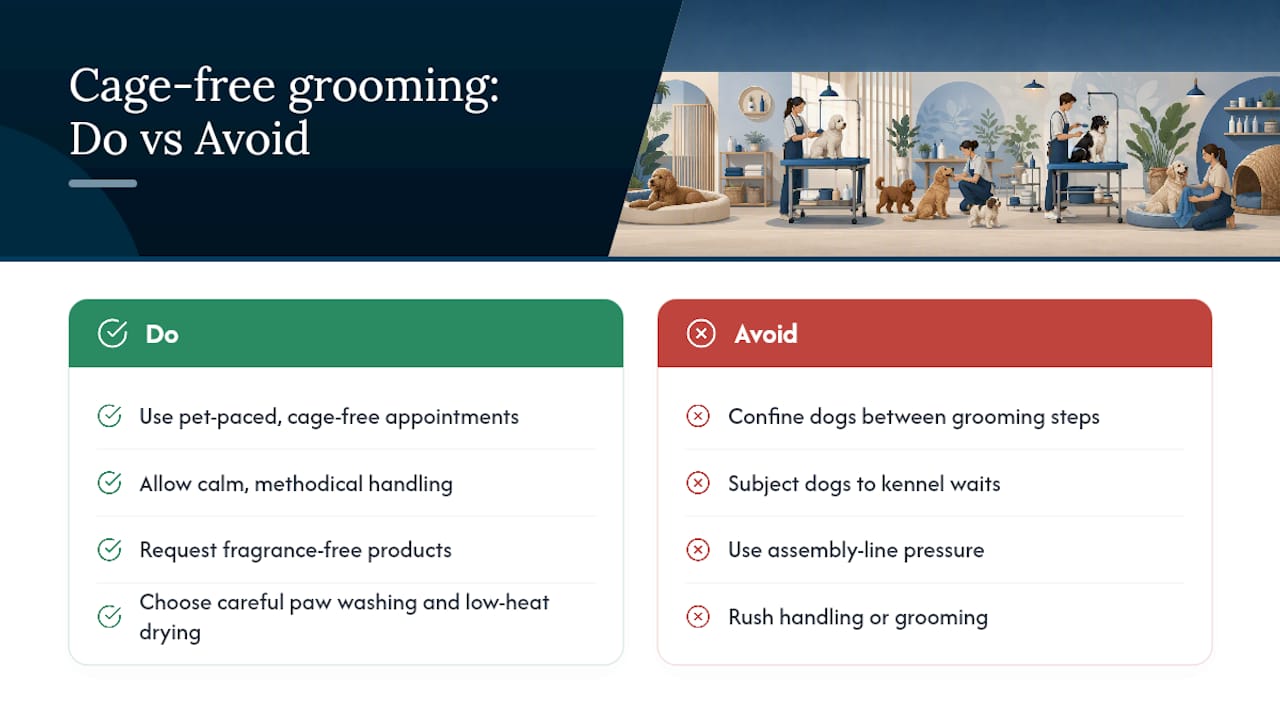
Stress and skin health are directly connected. When a dog is anxious, struggling, or confined between grooming steps, that physical tension can worsen existing irritation and make thorough, gentle work harder for the groomer. A pet-paced, cage-free environment removes that cycle.
At Pamperedpups-grooming, every dog moves through the appointment at their own pace. There is no kennel wait between steps, no assembly-line pressure, and no rushing. That calm handling lets our groomers work gently and methodically, which matters especially for dogs with sensitive or reactive skin. We offer fragrance-free product options on request, careful paw washing, and low-heat drying as standard practice.
Pro Tip: If your dog has never been professionally groomed or has had stressful experiences before, book a short introductory puppy or acclimation session first. A brief, positive first visit builds the trust that makes every future groom easier on their skin and their nerves.
Our full service menu, including specialty spa upgrades and medicated bath options, is available for dogs of all breeds and life stages across Mobile, Daphne, and Spanish Fort, AL.
The honest balance between grooming, products, and veterinary care
Grooming is skin care and allergen control combined. It is not a substitute for diagnostics when signs persist. The most effective approach pairs frequent, low-impact grooming for allergen management with vet-directed medicated shampoo schedules when the skin needs clinical support. Over-bathing, even with gentle products, can strip the skin barrier and make things worse.
Start with daily brushing and post-walk paw rinses. Add a fragrance-free hypoallergenic bath every two to four weeks. If symptoms do not improve after a few consistent weeks, that is your signal to call a veterinarian rather than add more products.
Gentle, allergy-aware grooming in Mobile, AL
Pamperedpups-grooming brings together everything this guide recommends: cage-free handling, pet-paced appointments, fragrance-free product options, careful paw washing, and low-heat drying, all under one roof in Mobile, AL.
Sensitive-skin dogs get the time and gentleness they need here, without the stress of a rushed salon. We serve Mobile, Daphne, and Spanish Fort, and our full grooming services menu includes specialty baths, spa upgrades, and breed-specific options for curly and hypoallergenic coats. Ready to book a calm, allergy-aware appointment? Contact us here to schedule your dog’s next groom.
Sources
- AAHA — Management of allergic skin disease (dog allergies overview)
- NIEHS — Pets and allergens overview
- How to bathe a dog with allergies — PetCareLab
- earthbath — Hypoallergenic Shampoo product page
- Pet & Life — Sensitive skin dog grooming: a complete care guide
- PuppySimply — Hypoallergenic coat care guide
Recommended
- How Often Should You Bathe Your Dog? A Mobile Groomer’s Guide | AL
- Dog Grooming Tips & Advice | The Pampered Pup Blog | Mobile, AL
- Beyond the Brush: Why Grooming Is Essential for Your Pet’s Well-Being | Mobile, AL
- Breed-Specific Dog Grooming in Mobile, AL | Doodles, Poodles & More | The Pampered Pup
Article generated by BabyLoveGrowth
Want a hand with this? We're a cage-free, pet-paced grooming salon on Oak Circle Drive East in Mobile, AL, with early drop-off from 7:30 AM Tuesday through Friday (8:30 AM Saturday). Book online or call 251-776-2104 and we'll build a plan around your dog.