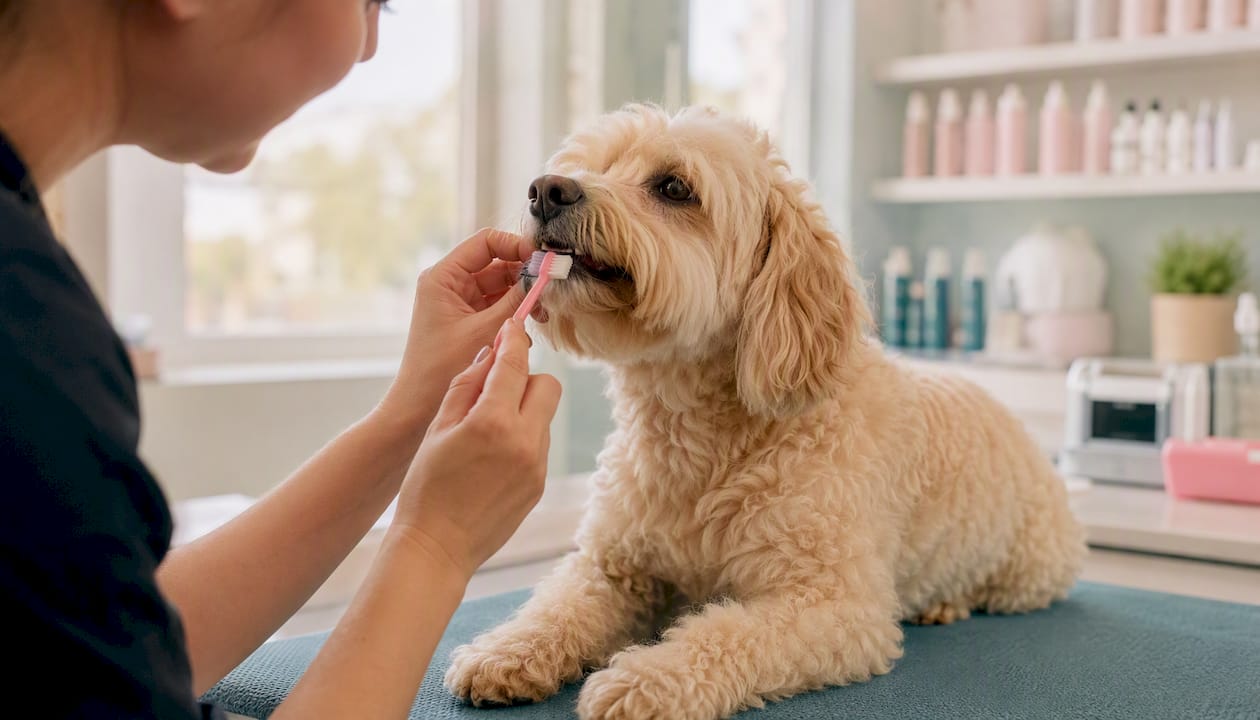
Brush your dog’s teeth daily. That is the gold standard, backed by the Veterinary Oral Health Council and confirmed by peer-reviewed clinical trials. If daily feels out of reach right now, every other day is the minimum that still produces meaningful plaque control. Anything less frequent than that offers limited long-term benefit.
Here is a quick reference for the three practical tiers:
- Daily: Best plaque and gingivitis control; the frequency all veterinary guidance points to.
- Every other day: Clinically meaningful; acceptable when daily is not possible.
- 2–3 times per week: A realistic starting point, but aim to increase over time.
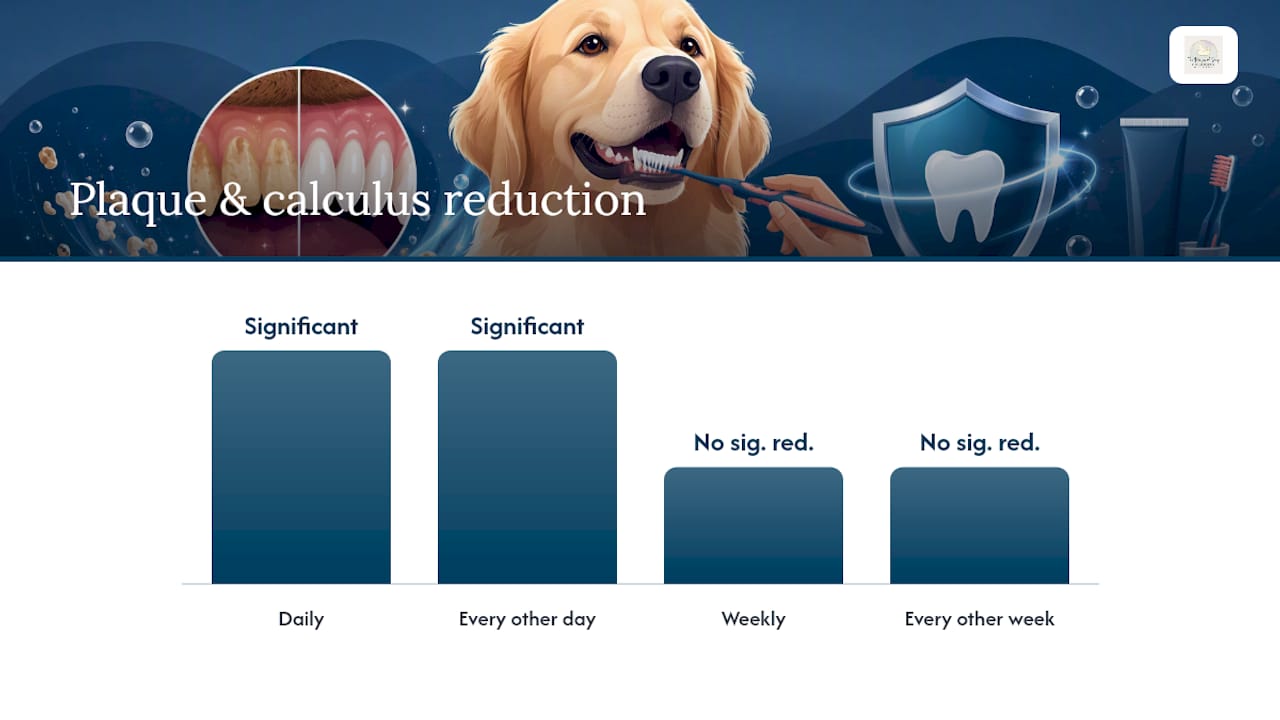
A randomized, controlled 28-day trial found that brushing daily or every other day produced statistically significant reductions in plaque and calculus compared with brushing weekly or every other week — making frequency the single most important variable in your dog’s oral care routine.
Key Takeaways
Daily brushing is the gold standard for dog dental care, with every-other-day brushing the minimum frequency shown to produce clinically meaningful plaque and calculus reduction.
| Point | Details |
|---|---|
| Daily is the gold standard | Brush every day to interrupt the plaque-to-calculus cycle before it completes. |
| Every other day is the minimum | Clinical trials show this frequency still reduces plaque and calculus significantly. |
| Use VOHC-accepted products | Choose toothpaste and adjuncts bearing the VOHC Seal; never use human toothpaste. |
| Watch for red flags | Bleeding gums, bad breath, or loose teeth mean a vet visit before home brushing resumes. |
| The Pampered Pup can help | The Pampered Pup Package includes tooth brushing in a calm, cage-free setting in Mobile, AL. |
Table of Contents
- Why dental disease starts faster than most owners expect
- How often should you brush your dog’s teeth?
- What equipment do you actually need?
- How to train your dog to accept toothbrushing
- Technique and timing: getting the most from each session
- When dental chews and wipes help — and when they don’t
- When to call your vet instead of reaching for the toothbrush
- What the research actually says about brushing frequency
- A note from us at The Pampered Pup
- Gentle dental care, done at your dog’s pace
- Sources
- FAQ
Why dental disease starts faster than most owners expect
Plaque forms on tooth surfaces within hours of a meal. Left undisturbed for a few days, it mineralizes into calculus (tartar), a hard deposit that no toothbrush can remove. Calculus harbors bacteria below the gum line, triggering gingivitis and, over time, periodontitis. Veterinary research has linked chronic periodontal disease to changes in renal, hepatic, and cardiac tissue, meaning your dog’s mouth health connects directly to whole-body wellness.
The key distinction: brushing removes soft plaque. It cannot remove calculus once it has formed. That is why frequency matters so much and why professional cleaning remains necessary even for dogs with good home-care routines.
Pro Tip: Once a month, gently lift your dog’s lip and check the gum line. Healthy gums are pale pink and firm. Red, swollen, or receding gums, or a brown crust at the tooth base, are signs to call your vet before starting or continuing home brushing.
Veterinary dentists note that dogs often hide dental pain. The VOHC emphasizes that the absence of obvious discomfort should never be taken as a sign that a dog’s mouth is healthy.
How often should you brush your dog’s teeth?
The answer depends on what you can realistically sustain, but here is what the evidence says about each tier.
A 5-week intra-subject study found that daily active dental home care reduced plaque and gingivitis in dogs, and that stress levels decreased as dogs adapted to the routine over time — meaning the routine gets easier, not harder, as weeks pass.
- Daily brushing. This is the schedule every major veterinary body recommends, including the VOHC and AAHA. Plaque begins hardening within 24–48 hours, so daily disruption keeps the cycle from completing.
- Every other day. The randomized controlled trial cited above showed this frequency still produced significant plaque and calculus reductions. If your schedule allows only this, you are still doing meaningful work.
- 2–3 times per week. A reasonable starting point while you build the habit and train your dog. Plan to increase toward every-other-day as your dog grows comfortable.
- Weekly or less. Clinical evidence shows little-to-no long-term benefit at this frequency. PetMD and veterinary consensus agree: weekly brushing is not enough to interrupt the plaque-to-calculus cycle reliably.
The honest takeaway: daily is best, every other day is acceptable, and anything less is a starting point rather than a destination.
What equipment do you actually need?
Choosing the right tools makes the routine gentler for your dog and more effective for you.
- Finger cloths or gauze pads: Soft and non-threatening; ideal for introducing oral touch to puppies or anxious dogs.
- Soft-bristled dog toothbrush: The most effective tool for reaching the gum line once your dog is comfortable. A child-sized human toothbrush works well for small breeds.
- VOHC-accepted dog toothpaste: Always use a toothpaste formulated for dogs. Human toothpaste contains fluoride and xylitol, both toxic to dogs. Look for the VOHC Seal of Acceptance on the label.
The VOHC Seal tells you something specific: the product was independently tested and shown to reduce either plaque, calculus, or both. Check the label carefully, because a seal for plaque control is not the same as a seal for calculus control. The VOHC accepted-products table lists every approved item by claim type, so you can verify before you buy.
A simple shopping checklist:
- Soft-bristled dog toothbrush or finger brush
- VOHC-accepted enzymatic dog toothpaste (poultry or vanilla-mint flavors tend to be well-tolerated)
- Finger cloths for early training sessions
- Treats for positive reinforcement
How to train your dog to accept toothbrushing
Patience and short sessions matter far more than the perfect brush. Here is a progressive plan that works for most dogs.
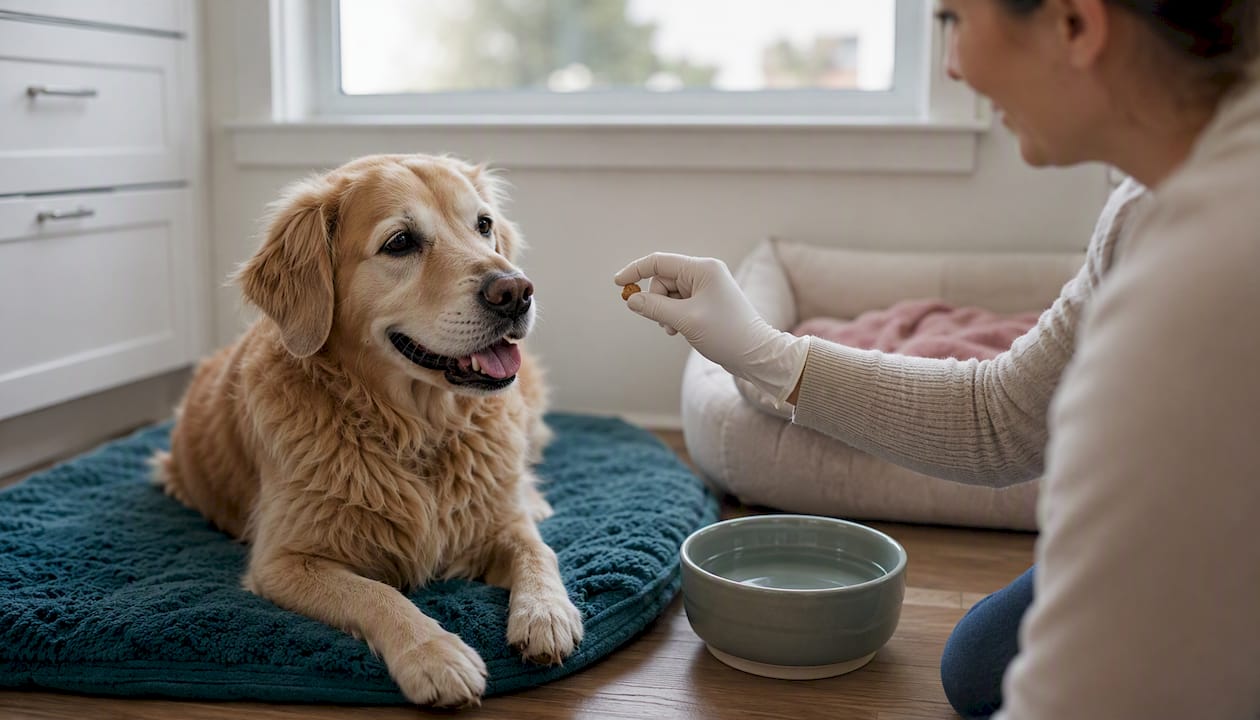
- Touch desensitization. For several days, simply lift your dog’s lip and touch the teeth and gums with your finger. Reward calmly after each session.
- Introduce the finger cloth. Wrap a damp cloth around your finger and gently rub the outer tooth surfaces. Keep sessions under 30 seconds.
- Add the brush without paste. Let your dog sniff and lick the dry brush. Then try a few gentle strokes on the front teeth only.
- Introduce toothpaste. Let your dog taste a small amount first. Once accepted, apply a pea-sized amount to the brush and work through the full mouth gradually.
- Build to a full session. Aim for roughly a brief period per side, working up to a complete mouth over several weeks.
Pro Tip: Starting tooth-handling when your puppy’s baby teeth are coming in is the single most effective way to build lifetime acceptance. Early desensitization reduces training time significantly and means brushing feels normal rather than novel by adulthood. Our puppy grooming program introduces gentle oral handling from the very first visit.
Reward with calm praise and a treat immediately after each session. Keep the energy quiet and steady. Rushing or restraining a reluctant dog creates aversion that can take weeks to undo.
Technique and timing: getting the most from each session
Where you brush matters as much as how often. Plaque accumulates most heavily on the outer (cheek-facing) surfaces of the upper back teeth, so start there.
- Angle the brush at 45 degrees to the gum line and use short, gentle circular strokes.
- Focus on the outer surfaces first. Most dogs tolerate this better than the inner surfaces, and it is where the most plaque builds.
- Aim for roughly a brief period per side as a session target, building toward a 2–3 minute full-mouth routine over time.
- Keep pressure light. Firm scrubbing is not more effective and can irritate gum tissue.
AAHA guidelines specifically warn that brushing inflamed gums causes pain and can create lasting aversion. If your dog pulls away or shows discomfort, shorten the session rather than pushing through. A 20-second positive experience beats a 2-minute struggle every time.
When dental chews and wipes help — and when they don’t
VOHC-approved chews, dental diets, and wipes can reduce plaque or tartar, depending on what the product’s seal actually claims. They are genuinely useful adjuncts, particularly for dogs who resist brushing.
- VOHC-approved dental chews: Mechanical abrasion and enzymatic action can reduce plaque. Check whether the seal covers plaque, calculus, or both.
- VOHC-accepted dental diets: Specially textured kibble can provide mild mechanical cleaning. Useful as a daily complement.
- Dental wipes: Easier than a brush for some dogs; less effective at reaching the gum line, but better than nothing.
- Water additives: Some carry the VOHC Seal; they add a passive layer of protection but should not replace active brushing.
No adjunct replaces brushing. The VOHC is clear that active mechanical cleaning of tooth surfaces is the most effective home-care method. Chews and diets support the routine; they do not substitute for it.
For dogs who resist brushing entirely, start with an approved chew or wipe while you work through the desensitization steps above. The goal is always to increase active brushing frequency over time.
When to call your vet instead of reaching for the toothbrush
Home care has real limits. Some conditions require professional attention before you brush at all.
Watch for these red flags and contact your vet promptly if you notice them:
- Persistent bad breath that does not improve with brushing
- Bleeding gums or gums that look red and swollen
- Loose, broken, or discolored teeth
- Swelling around the mouth or jaw
- Reduced appetite, dropping food, or pawing at the mouth
The AVMA recommends at least annual veterinary mouth and teeth checks for all dogs, with earlier attention whenever any of these signs appear. Calculus and below-the-gum disease require an anesthetized professional exam and cleaning — no toothbrush reaches there.
Pro Tip: If your dog’s mouth shows heavy tartar or inflamed gums, get a veterinary exam before starting home brushing. AAHA notes that brushing already-inflamed tissue causes pain and can make your dog resistant to oral care for months.
What the research actually says about brushing frequency
The clinical evidence behind the frequency tiers is worth understanding, because it explains why the recommendations are what they are.
A randomized, controlled 28-day trial compared brushing at four frequencies: daily, every other day, weekly, and every other week. Daily and every-other-day brushing produced statistically significant reductions in both plaque and calculus. Weekly and bi-weekly brushing did not. The trial was blinded and randomized, though sample size was limited, so it should be read as strong directional evidence rather than a definitive ceiling.
A separate 5-week intra-subject study tested manual toothbrushes, ultrasonic brushes, and textile devices. All four approaches reduced plaque and gingivitis with daily use, and dogs showed measurable habituation over the study period — meaning they became calmer and more cooperative as the weeks passed.
| Study | Design | Key finding |
|---|---|---|
| 28-day RCT (Sagepub) | Randomized, controlled, blinded | Daily and every-other-day brushing reduced plaque and calculus significantly vs. weekly |
| 5-week intra-subject trial (PMC) | Intra-subject, multiple device types | Daily care reduced plaque and gingivitis; dogs habituated over time |
The VOHC Seal of Acceptance provides a parallel layer of product-level evidence. Products earn the seal only after independent testing confirms they reduce plaque, calculus, or both by a defined threshold. When you see the seal, you know the claim has been verified, not just marketed.
A note from us at The Pampered Pup
Here on the Gulf Coast, we see the full picture of what humidity, salt air, and year-round heat do to a dog’s coat and comfort. Oral health is part of that picture. A dog who feels good in their mouth is a calmer, more cooperative grooming guest.
We introduce gentle tooth handling from a dog’s very first visit, working at their pace in our open, cage-free space. For dogs who are new to oral care, that calm first experience can shift everything. Our grooming and wellness services are designed around the idea that every part of a dog’s care, coat, skin, nails, and teeth, connects to how they feel overall.
Gentle dental care, done at your dog’s pace
The Pampered Pup Package at The Pampered Pup includes tooth brushing alongside a blueberry facial, deep coat conditioner, nail grinding, and paw balm — a full spa experience that introduces oral care in a calm, unhurried setting. For puppies just learning what a toothbrush is, or senior dogs who need extra patience, our puppy and senior grooming appointments are paced entirely around their comfort.
Professional grooming visits complement your home brushing routine rather than replace it. We can help your dog grow comfortable with oral handling, which makes your daily sessions at home gentler and more effective. Serving Mobile, Daphne, Spanish Fort, and Fairhope, we are ready when you are. Book your appointment online or call us at 251-776-2104.
Sources
- Veterinary Oral Health Council | Finding the most effective route to good oral health for your dog or cat.
- Improved Oral Health and Adaptation to Treatment in Dogs Using Manual or Ultrasonic Toothbrush or Textile of Nylon or Microfiber for Active Dental Home Care - PMC
- Effect of Frequency of Brushing Teeth on Plaque and Calculus Accumulation, and Gingivitis in Dogs
- Recommending home oral hygiene and products - AAHA
- Pet dental care - AVMA
This article is general information, not a substitute for advice from a qualified doctor. Consult a qualified healthcare professional about your own circumstances before acting on anything here.
FAQ
How often should I realistically brush my dog’s teeth?
Daily is the goal, and every other day is the minimum that clinical research supports. A randomized controlled trial found that brushing less than every other day produced little meaningful reduction in plaque or calculus over time.
Is it okay to never brush my dog’s teeth?
Skipping brushing entirely allows plaque to mineralize into calculus, which can only be removed by a veterinarian. The AVMA recommends at least annual professional dental exams, but home brushing between visits significantly slows disease progression.
What is the best toothpaste to use for dogs?
Use a dog-formulated toothpaste bearing the VOHC Seal of Acceptance. Human toothpaste contains fluoride and xylitol, both of which are toxic to dogs. Enzymatic formulas in poultry or mild mint flavors tend to be well-tolerated.
Can dental chews replace brushing?
No. VOHC-approved chews can reduce plaque as a supportive adjunct, but they do not replicate the mechanical cleaning that a brush provides at the gum line. Use them alongside brushing, not instead of it.
Does The Pampered Pup offer tooth brushing as a service?
Yes. Tooth brushing is included in the Pampered Pup Package available at our cage-free day spa in Mobile, Alabama. It is a calm, gentle introduction to oral care that complements your at-home routine.
Recommended
- How Often Should You Bathe Your Dog? A Mobile Groomer’s Guide | AL
- How Often Should You Groom a Doodle? | Doodle Grooming in Mobile, AL
- 5 Ways to Prevent Dog Matting Between Grooms | Mobile, AL Groomer
- Bath, Tidy-Up, or Full Groom? How to Know What Your Dog Needs | Mobile, AL
Want a hand with this? We're a cage-free, pet-paced grooming salon on Oak Circle Drive East in Mobile, AL, with early drop-off from 7:30 AM Tuesday through Friday (8:30 AM Saturday). Book online or call 251-776-2104 and we'll build a plan around your dog.